Tuesday, August 19, 2008

The real cost of paid sick leave is staggering


The National Federation of Independent Businesses has commissioned a study to calculate the real cost of paid sick leave to Ohio. The results:

  • 75,000 lost jobs.

  • 20% of the job losses to hit businesses with 20 or fewer employees.

  • $1.17 billion in costs to Ohio employers each year.

  • $9.4 billion in lost sales to Ohio businesses over the next 4 years.

Source: Cleveland.com.

Argument that FMLA does not prohibit retaliation falls on deaf ears at court of appeals


When a company is caught making a bad employment decision, they come to us, their lawyers, to bail them out. Bryant v. Dollar General Stores (6th Cir. 8/15/08), presents one such example. Dollar Stores fired Martha Bryant, who testified that her supervisor told her she was being fired "[b]ecause of your health, I don’t think you can do the job."

Faced with what one can safely call bad facts, Dollar Stores got creative. It argued, both to the trial court and on appeal, that the FMLA does not prohibit retaliation against an employee who takes FMLA leave. The 6th Circuit correctly rejected that argument, and held that the FMLA does, in fact, allow for retaliation claims:

Any "right" to take unpaid leave would be utterly meaningless if the statute’s bar against discrimination failed to prohibit employers from considering an employee’s FMLA leave as a negative factor in employment decisions. Interpreting § 2615(a)(2)'s ban on discrimination in a manner that would permit employers to fire employees for exercising FMLA leave would undoubtedly run contrary to Congress's purpose in passing the FMLA. ...

Dollar General's reading of the statute would essentially render the FMLA a nullity. Their interpretation would require us to believe that—despite including statutory provisions granting eligible employees the "rights" to take up to twelve weeks of unpaid leave in a twelve-month period and to be restored to their prior positions or equivalent positions upon their return—Congress wished to erect no obstacle to prevent employers from terminating employees who exercise their newly granted "rights." In enacting the FMLA, Congress plainly stated that "the purpose of this Act" included establishing a right for "employees to take reasonable leave for medical reasons." 29 U.S.C. § 2601(b). Interpreting the language in § 2615(a)(2), which bars employers from discriminating against employees, in a manner that would permit employers to terminate employees for taking qualifying medical leave is fundamentally inconsistent with the clear, unambiguous purpose of the FMLA.

There are two lessons to take from this case, aside from the common sense legal rule it announces. Lawyers are not superheroes. We cannot do the impossible, although we often try for our clients.

Monday, August 18, 2008

Five reasons why I'm against the Healthy Families Act


As most know, the Healthy Families Act paid sick leave mandate guarantees seven days of paid sick leave each year to employees who work at least 30 hours a week and a pro-rated number of days to employees working less than 30 hours in any workplace with at least 25 employees. Who can argue against paid time off from work? It's a benefit that most employees would love to have.

If employees dig deeper, however, they will realize that the Healthy Families Act, while attractive on its face, is not the cure-all they need for their families. In fact, it will cause more short and long term damage to Ohioans' jobs than lacking a few paid days off per year.

  1. Requiring employers to add paid sick leave is a threat to pay, benefits and jobs. The proposed mandate imposes significant added costs on employers, who in turn will be forced to look elsewhere to make up the difference. Other benefits, pay, and even jobs will be on the chopping block as businesses try to find the money to pay for sick leave. What good is paid sick leave if employees can no longer afford the health insurance that covers their sick family members because employers increase employees' contributions to counterbalance the cost of mandated sick leave?

  2. Even employers who already offer paid sick leave will be seriously penalized by this proposal. This proposal allows employees to take sick leave with little or no advance notice in increments as small as an hour or less. How will you feel if you have to cover for an employee who goes home, with pay and without notice, because he or she has an upset stomach? Moreover, this unannounced leave poses a serious threat to safety-sensitive operations like hospitals, nursing homes and day-care facilities.

  3. This mandate will brand Ohio as a job-killer. Ohio is suffering through its worst economic period in decades. This mandate will make Ohio the only state in the union with a mandated paid sick leave law, significantly driving up the cost of doing business when we can least afford it. Some Ohio companies will leave for less expensive states while companies in other states will dismiss Ohio as a potential location for expansion. In short, this mandate will kill economic development at a time when we need more jobs, not fewer jobs. What good is paid leave is there are no jobs left in which to use it?

  4. The increased cost of paying for sick leave will result in more expensive goods and services. High oil prices has already increased the costs of many goods and services. While employers in the short term will need to cut benefit packages to pay for this mandate, the long-term result will be increased costs of goods and services, as businesses need new ways try to cover the cost of paid sick leave.

  5. This proposal interferes with the established relationship between employers and employees at some of the nation’s most successful businesses. Many companies now operate under long-standing policies that provide employees with good pay and benefits in exchange for work arrangements that ensure a continued high level of production. This proposal guts the employer-employee relationship and threatens the production stability achieved during years of mutual cooperation.

Governor Strickland's efforts to broker a deal between business and union leaders appears to have failed. Unless the unexpected happens, the Healthy Families Act will be on November's ballot. It is important to keep these ideas in mind when considering this mandate, and not simply get caught up in the sex appeal of a few paid days off per year.

Friday, August 15, 2008

WIRTW #43


A quick thank you to everyone who helped make Monday's Blawg Review #172 a huge success - those who sent in suggested links and those who graciously linked to the post and helped drive traffic. Now, onto what I've been reading the rest of the week.

The Connecticut Employment Law Blog writes on the difficulty of predicting litigation costs at the start of an employment case.

The Delaware Employment Law Blog lists the top 10 reasons employers should screen their job applicants.

BLR's HR Daily Advisor presents another top 10 list, reasons why HR documentation fails in court.

WorkplaceHorizons reports on the Workplace Religious Freedom Act, which would amend Title VII by modifying the definition of "religion"and requiring employers to make an affirmative effort to reasonably accommodate the religious practices of employees.

The Labor and Employment Law Blog gives some advice for employers to consider in the use of GPS tracking devices.

The FMLA Blog summarizes Santacrose v. CSX Transportation, an 11th Circuit decision which held that an employer satisfied its duty to reasonably accommodate a disabled employee by permitting him to take intermittent FMLA leave.

The HR Capitalist asks whether your HR employees would violate HIPAA to see celebrities' medical records.

The Trial Technologists View reports on his recent use of technology to help an employer present its case in a sex discrimination trial.

Thursday, August 14, 2008

Even California thinks paid sick leave is a bad idea


California is uniformly thought of as the most liberal employment law state. It is often the test ground for new employment laws and theories. Yet, paid sick leave could not even make the grade in the Sunshine Golden State. According to the Angeles Times, California's paid sick leave measure died in its legislature:

A state bill to guarantee paid days off for sick workers died Thursday amid opposition from business lobbyists and lawmaker concern that the benefit was too costly.

The bill would have granted employees of small companies in California up to five days of paid sick leave each year. Workers at larger firms could take up to nine days a year. ...

Small businesses and their lobbyists who fought the sick-leave measure said they were relieved that it failed. They estimated that the bill would cost 370,000 jobs in California and would burden employers with $4.6 billion in new costs over a five-year period.

The bill "unfairly presumed that small-business owners are able to provide paid sick leave and don't want to," said John Kabeteck, executive director of the National Federation of Independent Businesses. "That couldn't be further from the truth. The fact is that many want to but simply can't afford it." ...

If the proposal had become law, California would have been the first state in the nation to provide universal paid sick leave. But it would have eroded the state's ability to attract new employers, said state Chamber of Commerce President Allan Zaremberg. Ma's proposal was high on the influential business lobby's annual list of "job killer" bills.

Do these themes sound familiar? Ohio's legislature has already rejected the Healthy Families Act. California has now done the same. If California, whose economy is much more robust than Ohio's, is concerned that a paid sick leave mandate will erode that state's ability to attract businesses, what will the same measure mean for Ohio?

Wednesday, August 13, 2008

Stupidest employee ever?


The above video is of a Xenia, Ohio, Burger King employee who not only thought it was a good idea to take a bath in the restaurant's utility sink, but then went one step further and posted it on YouTube. Cleveland.com reports that Burger King has fired all of the employees involved in the incident. It also released a statement that it had sterilized the sink, disposed of all kitchen tools and utensils used in the incident, and is retraining the staff in health and sanitation procedures.

A few points.

  1. I knew there was a reason why I don't like to eat fast food.

  2. This story provides another example of the risks employees take when posting videos or pictures on social networking sites.

  3. This story is also a good example of crisis management in the workplace. Burger King handled this situation properly. It fired everyone involved, and is retraining its remaining employees in health and sanitation. Any time a crisis rears its head, whether its sexual harassment, an employee taking a bath in a food preparation area, or something it is always a good idea to send the proper message and set expectations of future conduct through retraining.

A lesson in how not to handle a pregnant employee


"Being pregnant here - it's like wearing a scarlet letter 'P' on your chest," 673622_23238788 said Lori Ann DiPalo, 36, the MTA Bridges and Tunnels officer. The New York Daily News reports that DiPalo's physician certified the 10-week pregnant officer as fit for duty without restrictions. Nevertheless, she was stripped of her badge and gun and and banished to tollbooth duty.
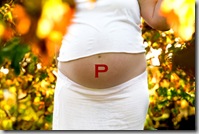
A doctor for Bridges and Tunnels read DiPalo's file and decided she shouldn't carry a gun.

"When I asked why, they said they didn't want to risk abdominal injury or me having to use 'deadly physical force,'" she said.

So DiPalo - unarmed but in uniform - now stands in a bridge tollbooth from 11 p.m. to 7 a.m. collecting tolls. ...

In her six years as a peace officer, DiPalo has arrested frauds, drunken drivers and other people who had noright to be behind the wheel. She has dispatched officers, handled roll call and patrolled the vulnerable bases of various bridges and entrances to tunnels - considered key targets for potential terror attacks.

"I like my job. I want to work. My doctor said I can," she said.

This paternalistic decision making is exactly the type of employment practice the EEOC sought to combat in drafting its Enforcement Guidance on Unlawful Disparate Treatment of Workers with Caregiving Responsibilities. Per the EEOC:

Employers can also violate Title VII by making assumptions about pregnancy, such as assumptions about the commitment of pregnant workers or their ability to perform certain physical tasks. As the Supreme Court has noted, "[W]omen as capable of doing their jobs as their male counterparts may not be forced to choose between having a child and having a job." Title VII's prohibition against sex discrimination includes a prohibition against employment decisions based on pregnancy, even where an employer does not discriminate against women generally. As with other sex-based stereotypes, Title VII prohibits an employer from basing an adverse employment decision on stereotypical assumptions about the effect of pregnancy on an employee's job performance, regardless of whether the employer is acting out of hostility or a belief that it is acting in the employee's best interest.

This story illustrates an important lesson about the perceptions we hold, consciously or unconsciously, about certain classes of employees. DiPalo was benched out of apparent good intentions. Nevertheless, that decision is not one for the employer to make. It is a decision between the pregnant employee and her doctor. Once the doctor clears her to work, it is out of the employer's hands to say otherwise, even if it has the mother's and baby's best interests at heart.