Wednesday, December 22, 2010

DOL shares its preliminary interpretations on lactation breaks


Typically, December is a slow month for litigators. Courts stop calling juries. We all take vacations. Typically, the closer we get to Christmas the slower it gets, except, apparently, for the federal agencies in Washington. Yesterday, the NLRB published its proposed posting regulations, and the Department of Labor published its preliminary interpretation of the recent federal lactation break mandate.

Here are the DOL’s preliminary thoughts on employers’ obligations to lactating women:

  • Paid or unpaid breaks? Employers are not required to compensate nursing mothers for breaks taken for the purpose of expressing milk. However, lactation breaks are covered by the same rules that govern other work day breaks. If the employer permits short breaks, usually 20 minutes or less, the time must be counted as hours worked and paid accordingly. Additional time used beyond the authorized paid break time could be uncompensated.

  • What is a reasonable break time? Employers should consider both the frequency and number of breaks a nursing mother might need and the length of time she will need to express breast milk. The DOL believes that most women will need to take 2 to 3 breaks per 8 hour shift, each lasting between 15 and 20 minutes. These guidelines, however, are just that, and will vary from woman to woman depending on specific circumstances and needs.

  • What is an appropriate lactation space? An employer has no obligation to maintain a permanent, dedicated space for nursing mothers. Any space temporarily created or converted into a space for expressing milk or made available when needed by a nursing mother is sufficient, provided that the space is shielded from view, free from intrusion from coworkers and the public, and suitable for lactation. The only room that is not appropriate is a bathroom. The DOL also believes that an employee’s right to express milk includes the ability to safely store the milk.

  • What qualifies as an undue hardship for employers with less than 50 employees? The difficulty or expense must be “significant,” which is a stringent standard that employers will only be able to meet in limited circumstances.

  • Is there a relationship between lactation breaks and the FMLA? No. The DOL does not believe that breaks to express breast milk can be considered FMLA leave or counted against an employee’s FMLA leave entitlement.  

The DOL is accepting public comment on these preliminary interpretations until February 22, 2011. Anyone may submit comments either electronically at www.regulations.gov, or by mail to Montaniel Navarro, U.S. Department of Labor, 200 Constitution Avenue, NW., Room S-3502, Washington, DC 20210.

This issue will remain hot in 2011 as we await the DOL’s final comments and as employers continue to figure out how to make these new obligations work in their specific workplaces.


Presented by Kohrman Jackson & Krantz, with offices in Cleveland and Columbus. For more information, contact Jon Hyman, a partner in our Labor & Employment group, at (216) 736-7226 or jth@kjk.com.

When did we all stop accepting responsibility?


3127204345_13d184d865_m A woman in California has filed a class action lawsuit against McDonald’s. She claims that McDonald’s temps kids to eat unhealthily by promoting their fattening food with Happy Meal toys. I know you may this hard to believe, but, yes, parents, if you feed you kids too many Happy Meals, they may get fat. If a court agrees with this lawsuit, the parents who use McDonald’s as a crutch to feed their kids will be absolved of any responsibility for the resulting obesity. Yet, is it just the cheap cardboard box and tchotchke toys, or does the obesity result from parents that are either too busy or too lazy to feed their kids healthy foods? Or, do parents that permit their children to lounge around the house watching TV and playing video games beget overweight kids? Yes, too much fast food can make you fat. But, not only is it not the only reason kids become overweight, I’d venture to guess it is not the main reason either.
We have become a society that refuses to accept responsibilities for our faults. I see it all the time in employment cases. The insubordinate employee is convinced that her race/sex/age/disability was the reason behind her termination. The chronically late employee is convinced that he is being retaliated against despite his unreliability. The overly sensitive employee shrieks that one harmless email is a pattern and practice of lascivious harassment. One theme that resonates over and over in cases I defend is a refusal to accept responsibility. Yes, employers do discriminate, and retaliate, and harass. More often than not, however, businesses simply try to do right by their employees. Yet, if you believe all of the lawsuits that are filed, corporate America is one giant group of bigots and employees are never responsible for their own unemployment.

As we approach the new year, let’s all make it a resolution in 2011 to start taking responsibility for our own faults and shortcomings. It may decrease the number of lawsuits I am called on to defend, but it will make us a more credible society.


Presented by Kohrman Jackson & Krantz, with offices in Cleveland and Columbus. For more information, contact Jon Hyman, a partner in our Labor & Employment group, at (216) 736-7226 or jth@kjk.com.

Tuesday, December 21, 2010

Merry Christmas employers—NLRB proposes posting of federal labor rights for ALL covered employees


Today is National Look on the Bright Side Day. I’m having a hard time, though, finding the silver lining in the latest news to come from the NLRB. The agency is proposing that all employers that are potentially covered by the National Labor Relations Act (which is virtually all private-sector employers except for agricultural, railroad, and airline employers) notify employees of their rights under that Act. According to the NLRB's press release: “[M]any employees protected by the NLRA are unaware of their rights under the statute. The intended effects of this action are to increase knowledge of the NLRA among employees, to better enable the exercise of rights under the statute, and to promote statutory compliance by employers and unions.”

The posting would be similar to that which the DOL has mandated for federal contractors. The proposed posting would state that employees have the right to act together to improve wages and working conditions, to form, join and assist a union, to bargain collectively with their employer, and to choose not to do any of these activities. It also would provide examples of unlawful employer and union conduct and instructs employees how to contact the NLRB with questions or complaints.

The NLRB is accepting public comments on this proposed rule for the next 60 days. Comments can be either submitted electronically to www.regulations.gov, or by mail or hand-delivery to Lester A. Heltzer, Executive Secretary, NLRB, 1099 14th Street NW, Washington DC 20570. I urge business

In the meantime, I will continue to try to look on the bright side.


Presented by Kohrman Jackson & Krantz, with offices in Cleveland and Columbus. For more information, contact Jon Hyman, a partner in our Labor & Employment group, at (216) 736-7226 or jth@kjk.com.

Do you know? Employee alcohol testing


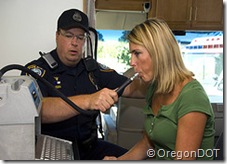
Under the ADA, an employer is prohibited from making disability-related inquiries and requiring medical examinations of employees unless if the inquiries are job-related and consistent with business necessity. In September, the EEOC filed suit against Pittsburgh-based U.S. Steel, claiming that it violated these rules by requiring random alcohol testing of probationary employees.

According to the EEOC’s Enforcement Guidance on Disability-Related Inquiries and Medical Examinations of Employees, the ADA differentiates between drug testing and alcohol testing. The ADA does not regulate the drug testing of employees because drug tests do not qualify as medical examinations. Blood, urine, and breath analyses to check for alcohol use, however, are considered medical examinations regulated by the ADA. Employers are permitted to maintain and enforce rules prohibiting employees from being under the influence of alcohol in the workplace. Employers are also permitted to conduct alcohol testing pursuant to such a rule if they have a reasonable belief that an employee may be under the influence of alcohol at work.

Random testing is just that, random. It is not tied to any reasonable belief about the employee’s on-the-job use of alcohol. I can make a very compelling argument that in any safety-sensitive position alcohol testing is job-related and consistent with business necessity. Nevertheless, and regardless of the circumstances, employers who intend to subject employees to alcohol testing should be mindful of these rules. Those that test without first consulting with employment counsel risk incurring the EEOC’s wrath.


Presented by Kohrman Jackson & Krantz, with offices in Cleveland and Columbus. For more information, contact Jon Hyman, a partner in our Labor & Employment group, at (216) 736-7226 or jth@kjk.com.

Monday, December 20, 2010

NLRB to permit “sweetheart” contracts


Imagine a union comes to you claiming to have signed authorization cards from a majority of your employees and offers you the following proposition. Instead of holding a secret ballot election, you recognize the union based on the signed cards. In exchange, the union will give you a sweetheart contract—a pre-negotiated contract with favorable terms and conditions. Here’s the catch. The contract has to contain a neutrality clause—a promise by the company to remain neutral in future organizing campaigns, forego secret ballot elections at any other facility, and recognize the union based upon a presentation of an authorization card majority at any other facility.

In Dana Corp. (10/6/10) [pdf], the NLRB sanctioned this practice as lawful under federal labor laws, and rejected a challenged by a group of anti-union employees that their employer had illegally colluded with the union:

The ultimate object of the National Labor Relations Act … is “industrial peace.” [I]t is well settled, consistent with those policies, that an employer may voluntarily recognize a union that has demonstrated majority support by means other than an election, including … authorization cards signed by a majority of the unit employees. Courts have endorsed voluntary recognition and deemed it “a favored element of national labor policy.” The Board should hesitate before creating new obstacles to voluntary recognition….

Categorically prohibiting pre-recognition negotiations over substantive issues would needlessly preclude unions and employers from confronting workplace challenges in a strategic manner that serves the employer’s needs, creates a more hospitable environment for collective bargaining, and—because no recognition is granted unless and until the union has majority support—still preserves employee free choice.

Just because you can agree to this “sweetheart” relationship with a union does not mean that you should. As the NLRB noted, “In practice, an employer’s willingness to voluntarily recognize a union may turn on the employer’s ability to predict the consequences of doing so.” An employer’s willingness to voluntarily recognize a union will also turn on its ability to predict the outcome of a secret ballot election. Currently, unions win 65.6% of secret ballot elections. Before you agree to take a union up on its voluntary recognition offer, you need to make an educated guess on whether your company falls within the one-out-of-three that wins a union election. If so, reject the union’s offer and opt for the election. Otherwise, you might be hedging your bets when you don’t have to.


Presented by Kohrman Jackson & Krantz, with offices in Cleveland and Columbus. For more information, contact Jon Hyman, a partner in our Labor & Employment group, at (216) 736-7226 or jth@kjk.com.

Friday, December 17, 2010

WIRTW #157 (the naughty or nice edition)


Peter the Elf graces our home every year between Thanksgiving night and Christmas Eve. He’s my family’s Elf on the Shelf. If you don’t have kids (or don’t celebrate Christmas), the Elf on the Shelf (available at Amazon and other fine retailers) is Santa’s eyes and ears. Each night after the kids go to bed he flies back to the North Pole to report to Santa on whether the kids are being naughty or nice. Each morning, before the kids awaken, he returns, perched in a different spot. The children can talk to Peter, but he is not allowed to talk back. But, if they touch Peter, he loses his Christmas magic and cannot fly back to the North Pole to tell Santa how good they’ve been (although I guess if they’ve been naughty they have nothing to lose).

My daughter (age 4½) added these words of wisdom about Peter in deciding to get dressed in her bedroom instead of our family room: “I don’t want Peter to see me naked. Then I’ll definitely get rocks for Christmas.”

Employers, were you naughty or nice in 2010? There’s still time to get on my nice list by clicking over to the ABA Blawg 100 and casting your vote for the Ohio Employer’s Law Blog.

Here are two great holiday-related posts I read this week:

Here’s the rest of what I read this week:

Discrimination

Social Media

Privacy & Technology

HR & Employee Relations

Wage & Hour


Presented by Kohrman Jackson & Krantz, with offices in Cleveland and Columbus. For more information, contact Jon Hyman, a partner in our Labor & Employment group, at (216) 736-7226 or jth@kjk.com.

Thursday, December 16, 2010

University of Minnesota sidesteps minimum wage violations for “volunteer” employees


Have you seen the amazing video of the roof the Metrodome collapsing last weekend?


In need of a temporary home to host this Monday night’s game, the Vikings turned to the University of Minnesota. The problem, though, is that the University’s stadium is under five-foot snow drifts. To clear the field and seating bowl, the University asked for volunteers to work around the clock. ESPN is now reporting that the University will pay any shovelers, which is a very smart move on the school’s part.

The FLSA requires people who perform any work to be paid for all time spent working. Requiring anyone to perform work without pay violates this law. There is no such thing as a volunteer employee. All work hours must be paid hours, at least at the minimum wage (with the limited exception of bona fide interns).

It looks like the University received some sage legal advice before letting any “volunteers” lift any shovels. It is also an excellent example of how spending a few minutes consulting with your attorney could save you a few years of time having your attorney litigate for you.


Presented by Kohrman Jackson & Krantz, with offices in Cleveland and Columbus. For more information, contact Jon Hyman, a partner in our Labor & Employment group, at (216) 736-7226 or jth@kjk.com.