Tuesday, December 21, 2010

Merry Christmas employers—NLRB proposes posting of federal labor rights for ALL covered employees


Today is National Look on the Bright Side Day. I’m having a hard time, though, finding the silver lining in the latest news to come from the NLRB. The agency is proposing that all employers that are potentially covered by the National Labor Relations Act (which is virtually all private-sector employers except for agricultural, railroad, and airline employers) notify employees of their rights under that Act. According to the NLRB's press release: “[M]any employees protected by the NLRA are unaware of their rights under the statute. The intended effects of this action are to increase knowledge of the NLRA among employees, to better enable the exercise of rights under the statute, and to promote statutory compliance by employers and unions.”

The posting would be similar to that which the DOL has mandated for federal contractors. The proposed posting would state that employees have the right to act together to improve wages and working conditions, to form, join and assist a union, to bargain collectively with their employer, and to choose not to do any of these activities. It also would provide examples of unlawful employer and union conduct and instructs employees how to contact the NLRB with questions or complaints.

The NLRB is accepting public comments on this proposed rule for the next 60 days. Comments can be either submitted electronically to www.regulations.gov, or by mail or hand-delivery to Lester A. Heltzer, Executive Secretary, NLRB, 1099 14th Street NW, Washington DC 20570. I urge business

In the meantime, I will continue to try to look on the bright side.


Presented by Kohrman Jackson & Krantz, with offices in Cleveland and Columbus. For more information, contact Jon Hyman, a partner in our Labor & Employment group, at (216) 736-7226 or jth@kjk.com.
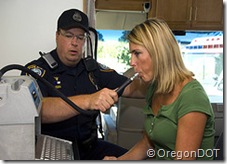
Do you know? Employee alcohol testing


Under the ADA, an employer is prohibited from making disability-related inquiries and requiring medical examinations of employees unless if the inquiries are job-related and consistent with business necessity. In September, the EEOC filed suit against Pittsburgh-based U.S. Steel, claiming that it violated these rules by requiring random alcohol testing of probationary employees.

According to the EEOC’s Enforcement Guidance on Disability-Related Inquiries and Medical Examinations of Employees, the ADA differentiates between drug testing and alcohol testing. The ADA does not regulate the drug testing of employees because drug tests do not qualify as medical examinations. Blood, urine, and breath analyses to check for alcohol use, however, are considered medical examinations regulated by the ADA. Employers are permitted to maintain and enforce rules prohibiting employees from being under the influence of alcohol in the workplace. Employers are also permitted to conduct alcohol testing pursuant to such a rule if they have a reasonable belief that an employee may be under the influence of alcohol at work.

Random testing is just that, random. It is not tied to any reasonable belief about the employee’s on-the-job use of alcohol. I can make a very compelling argument that in any safety-sensitive position alcohol testing is job-related and consistent with business necessity. Nevertheless, and regardless of the circumstances, employers who intend to subject employees to alcohol testing should be mindful of these rules. Those that test without first consulting with employment counsel risk incurring the EEOC’s wrath.


Presented by Kohrman Jackson & Krantz, with offices in Cleveland and Columbus. For more information, contact Jon Hyman, a partner in our Labor & Employment group, at (216) 736-7226 or jth@kjk.com.

Monday, December 20, 2010

NLRB to permit “sweetheart” contracts


Imagine a union comes to you claiming to have signed authorization cards from a majority of your employees and offers you the following proposition. Instead of holding a secret ballot election, you recognize the union based on the signed cards. In exchange, the union will give you a sweetheart contract—a pre-negotiated contract with favorable terms and conditions. Here’s the catch. The contract has to contain a neutrality clause—a promise by the company to remain neutral in future organizing campaigns, forego secret ballot elections at any other facility, and recognize the union based upon a presentation of an authorization card majority at any other facility.

In Dana Corp. (10/6/10) [pdf], the NLRB sanctioned this practice as lawful under federal labor laws, and rejected a challenged by a group of anti-union employees that their employer had illegally colluded with the union:

The ultimate object of the National Labor Relations Act … is “industrial peace.” [I]t is well settled, consistent with those policies, that an employer may voluntarily recognize a union that has demonstrated majority support by means other than an election, including … authorization cards signed by a majority of the unit employees. Courts have endorsed voluntary recognition and deemed it “a favored element of national labor policy.” The Board should hesitate before creating new obstacles to voluntary recognition….

Categorically prohibiting pre-recognition negotiations over substantive issues would needlessly preclude unions and employers from confronting workplace challenges in a strategic manner that serves the employer’s needs, creates a more hospitable environment for collective bargaining, and—because no recognition is granted unless and until the union has majority support—still preserves employee free choice.

Just because you can agree to this “sweetheart” relationship with a union does not mean that you should. As the NLRB noted, “In practice, an employer’s willingness to voluntarily recognize a union may turn on the employer’s ability to predict the consequences of doing so.” An employer’s willingness to voluntarily recognize a union will also turn on its ability to predict the outcome of a secret ballot election. Currently, unions win 65.6% of secret ballot elections. Before you agree to take a union up on its voluntary recognition offer, you need to make an educated guess on whether your company falls within the one-out-of-three that wins a union election. If so, reject the union’s offer and opt for the election. Otherwise, you might be hedging your bets when you don’t have to.


Presented by Kohrman Jackson & Krantz, with offices in Cleveland and Columbus. For more information, contact Jon Hyman, a partner in our Labor & Employment group, at (216) 736-7226 or jth@kjk.com.

Friday, December 17, 2010

WIRTW #157 (the naughty or nice edition)


Peter the Elf graces our home every year between Thanksgiving night and Christmas Eve. He’s my family’s Elf on the Shelf. If you don’t have kids (or don’t celebrate Christmas), the Elf on the Shelf (available at Amazon and other fine retailers) is Santa’s eyes and ears. Each night after the kids go to bed he flies back to the North Pole to report to Santa on whether the kids are being naughty or nice. Each morning, before the kids awaken, he returns, perched in a different spot. The children can talk to Peter, but he is not allowed to talk back. But, if they touch Peter, he loses his Christmas magic and cannot fly back to the North Pole to tell Santa how good they’ve been (although I guess if they’ve been naughty they have nothing to lose).

My daughter (age 4½) added these words of wisdom about Peter in deciding to get dressed in her bedroom instead of our family room: “I don’t want Peter to see me naked. Then I’ll definitely get rocks for Christmas.”

Employers, were you naughty or nice in 2010? There’s still time to get on my nice list by clicking over to the ABA Blawg 100 and casting your vote for the Ohio Employer’s Law Blog.

Here are two great holiday-related posts I read this week:

Here’s the rest of what I read this week:

Discrimination

Social Media

Privacy & Technology

HR & Employee Relations

Wage & Hour


Presented by Kohrman Jackson & Krantz, with offices in Cleveland and Columbus. For more information, contact Jon Hyman, a partner in our Labor & Employment group, at (216) 736-7226 or jth@kjk.com.

Thursday, December 16, 2010

University of Minnesota sidesteps minimum wage violations for “volunteer” employees


Have you seen the amazing video of the roof the Metrodome collapsing last weekend?


In need of a temporary home to host this Monday night’s game, the Vikings turned to the University of Minnesota. The problem, though, is that the University’s stadium is under five-foot snow drifts. To clear the field and seating bowl, the University asked for volunteers to work around the clock. ESPN is now reporting that the University will pay any shovelers, which is a very smart move on the school’s part.

The FLSA requires people who perform any work to be paid for all time spent working. Requiring anyone to perform work without pay violates this law. There is no such thing as a volunteer employee. All work hours must be paid hours, at least at the minimum wage (with the limited exception of bona fide interns).

It looks like the University received some sage legal advice before letting any “volunteers” lift any shovels. It is also an excellent example of how spending a few minutes consulting with your attorney could save you a few years of time having your attorney litigate for you.


Presented by Kohrman Jackson & Krantz, with offices in Cleveland and Columbus. For more information, contact Jon Hyman, a partner in our Labor & Employment group, at (216) 736-7226 or jth@kjk.com.

Wednesday, December 15, 2010

6th Circuit recognizes reasonable expectation of privacy in commercially-stored emails


Earlier this year, in Quon v. Arch Wireless, the Supreme Court dodged the question of whether one has a reasonable expectation of privacy in electronic communications. Yesterday, in U.S. v. Warshak (6th Cir. 12/14/10) [pdf], the 6th Circuit answered the question, at least as it pertains to one’s commercially-provided email account.

Warshak involves the criminal convictions of the distributors of the male enhancement herbal supplement Enzyte. Some the evidence used to convict Steven Warshak came from the government’s warrantless seizure of his emails account. Although the 6th Circuit affirmed the use of the emails in Warshak’s trial, the court, for the first time, recognized that individuals enjoy an objectively reasonable expectation of privacy in their commercially-stored email accounts:

Since the advent of email, the telephone call and the letter have waned in importance, and an explosion of Internet-based communication has taken place. People are now able to send sensitive and intimate information, instantaneously to friends, family, and colleagues half a world away. Lovers exchange sweet nothings, and businessmen swap ambitious plans, all with the click of a mouse button. Commerce has also taken hold in email. Online purchases are often documented in email accounts, and email is frequently used to remind patients and clients of imminent appointments. In short, “account” is an apt word for the conglomeration of stored messages that comprises an email account, as it provides an account of its owner’s life….

Email is the technological scion of tangible mail, and it plays an indispensable part in the Information Age. Over the last decade, email has become “so pervasive that some persons may consider [it] to be [an] essential means or necessary instrument[ ] for self-expression, even self-identification.” … It follows that email requires strong protection under the Fourth Amendment….

Unlike Quon, Warshak is not an employment case. Nevertheless, it provides insight into court’s views of email and personal privacy. And, it gets the issue right. Employers should continue to take heed if they pry into employees’ personal (i.e., non-employer-provided) email accounts. Courts will likely continue to err on the side of protecting employees’ privacy rights in their own personal emails, and will likely take a long, hard look at businesses that invade that privacy.


Presented by Kohrman Jackson & Krantz, with offices in Cleveland and Columbus. For more information, contact Jon Hyman, a partner in our Labor & Employment group, at (216) 736-7226 or jth@kjk.com.

Tuesday, December 14, 2010

Do you know? ABA/DOL’s Bridge to Justice (or, Bridge Over Troubled Referrals)


A couple of weeks ago, the American Bar Association and the Department of Labor’s Wage and Hour Division announced an unprecedented collaboration called “Bridge to Justice.” It is an ABA-approved attorney referral system to connect those who file wage and hour complaints with the DOL to attorneys who will handle cases the DOL is not interested in pursuing. Here’s the quick and dirty, courtesy of the DOL’s website:

Beginning on December 13, 2010, when FLSA or FMLA complainants are informed that the Wage and Hour Division is declining to pursue their complaints, they will also be given a toll-free number to contact the newly created ABA-Approved Attorney Referral System….

In addition, when the Wage and Hour Division has conducted an investigation, the complainant will now be provided information about the Wage and Hour Division’s determination regarding violations at issue and back wages owed. This information will be given to the complainants in the same letter informing them that the Wage and Hour Division will not be pursuing further action, and will be very useful for attorneys who may take the case. The Wage and Hour Division has also developed a special process for complainants and representing attorneys to quickly obtain certain relevant case information and documents when available.

Did I read that right? Will the DOL be providing the complaining party and the referred attorney “relevant case information and documents?” The DOL explains, in a short FAQ about its new attorney referral system:

Q: How does the ABA-Approved Attorney Referral Document Request process work?

A: A complainant who has received the toll-free number to the ABA-Approved Attorney Referral System after a Wage and Hour Division investigation will also receive a form to request the most relevant documents from her case file. These documents include the complainant’s own statement, the Wage and Hour Division’s back wage computations for the complainant, and copies of any documents the complainant provided to the Wage and Hour Investigator. The Wage and Hour Division will provide these documents expeditiously. The form also allows the worker or authorized attorney representative to request the case narrative from the file; however, it explains that requesting the narrative will delay the Wage and Hour Division’s response because it must be redacted. The letter sent to the complainant with notification of the Wage and Hour Division’s decision to not pursue the case will also include information about the violations found and back wages owed to the complainant.

In other words, the DOL will provide employees and the referred attorneys a roadmap to filing a lawsuit: the complainant’s statement, the nature of any violations found to have occurred, back wage computations, and the DOL’s own internal narrative.

It used to be that if the DOL declined to pursue a charge, there existed a better than average chance the claim would die. Now, lawyers will be lining up to receive a referral, along with a connect-the-dots claim. If this referral program doesn’t scare employers into conducting a proactive and comprehensive wage and hour audit to prevent these referral from taking place, nothing will.


Presented by Kohrman Jackson & Krantz, with offices in Cleveland and Columbus. For more information, contact Jon Hyman, a partner in our Labor & Employment group, at (216) 736-7226 or jth@kjk.com.